

A magnificent collection of Indian firework posters from the 1970s is sure to spark interest in the saleroom next week<feb 24>, writes Charles Hanson</feb 24>
A magnificent collection of Indian firework posters from the 1970s is sure to spark interest in the saleroom next week, writes Charles Hanson

To any child of the ‘70s the firework safety code is about as ingrained in the psyche as the “no petting” poster in the local swimming pool.
The often-repeated instructions demanded you kept fireworks in a closed box, only set them off at arm’s length and never – ever – returned to a lit firework.
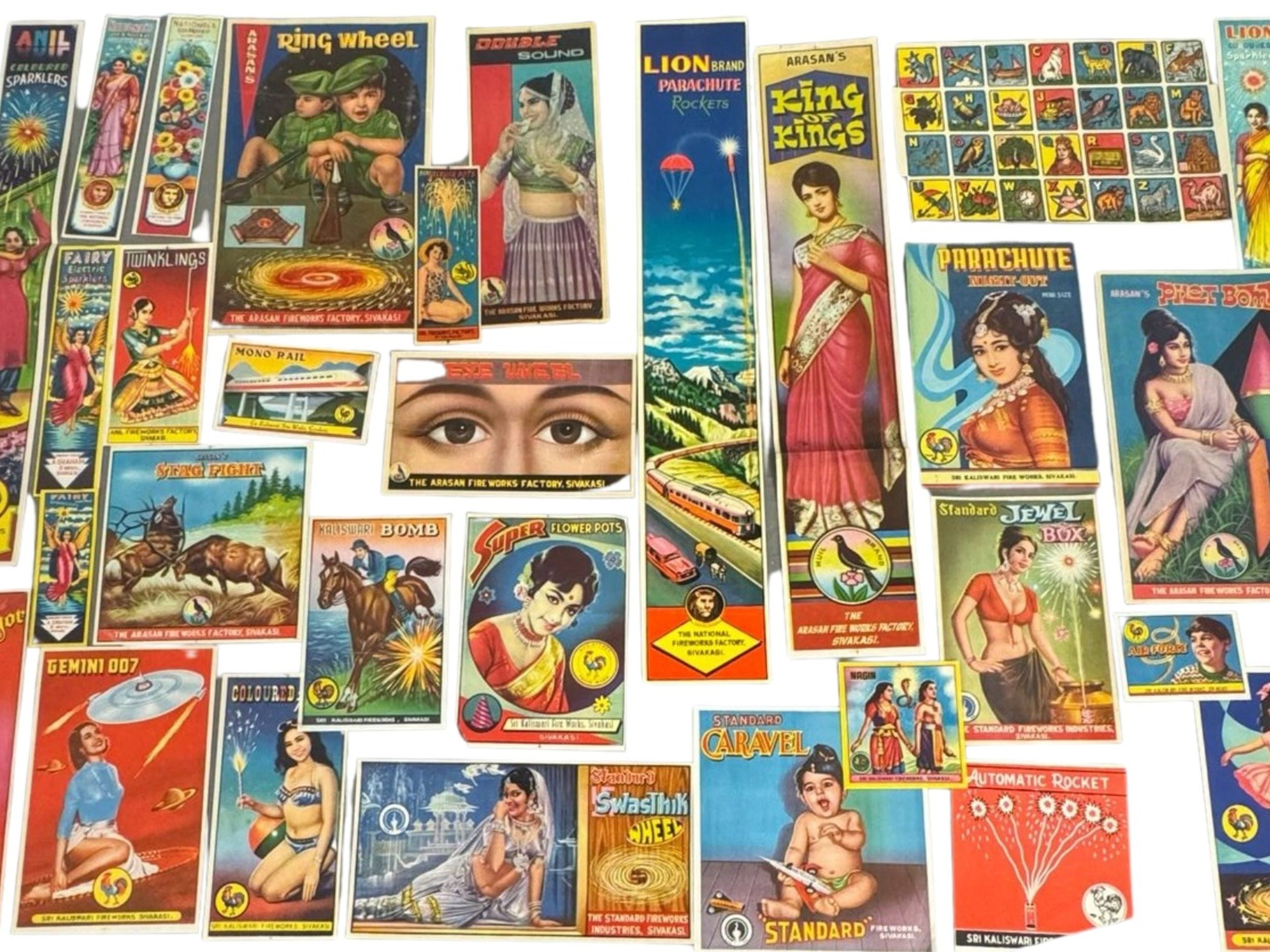
So it was a delightful, if rather triggering experience, when we were recently consigned for sale some 260 Indian firework advertising posters all with a somewhat cavalier approach to health and safety.
Beautiful as they undoubtedly are, the posters show babies cradling a Catherine wheel and toddlers hurling rockets.
Consigned by a retired Cornish gentleman, the posters were given to him as an engagement present by a friend who had travelled in India almost 50 years ago.
Without the space to display 260 posters, the posters had sadly remained in a folder ever since.
Consignments like these are notoriously different to value but the posters’ brightly-coloured, even slightly kitsch look, is very fashionable today and we expect them to make £800-£1,200 when they go under the hammer in Penzance on Tuesday.
All of them come from factories in Sivakasi is a town in southern India famous worldwide for making fireworks.
It’s often called the country’s fireworks capital because it produces about 90 percent of the country’s firecrackers and around 80 percent of its safety matches.
The area’s hot, dry climate is ideal for storing and drying explosive chemicals, which is one reason the industry developed there.


The industry traces back to 1923, when two entrepreneurs brought match-making techniques learnt in Kolkata to the region.
The pair started match factories, then moved into fireworks production.
From just a few factories in the 1940s, the number grew to hundreds by the late 20th century.
And with fireworks came the need to market them.
Unlike Western advertising posters, mid-century Indian designs weren’t credited to a particular artist as most factories saw them as part of the packaging process rather than art.
But despite this, posters like these are very special. Many show vivid, hand-painted images of women and children in dramatic action poses.
Because of the firework industry, over time Sivakasi also became known as one of India’s biggest printing hubs – with its designs expanding beyond rockets and sparklers.
In fact, if you can bring to mind a brightly-coloured picture of a Hindu god or goddess, perhaps on a calendar, it likely came from a Sivakasi printing press.
One of the best-known artists was C. Kondiah Raju (1898-1972) a popular calendar artist who gained fame during the printing boom in Sivakasi.
His prints of religious imagery became so widespread that, even today, many people visualise Indian gods through his depictions.
I am confident the posters on sale this month will strike a chord with collectors whether in this country or farther afield. In fact, I am hoping they will skyrocket.

Auction Details
Auction: Cornwall February Antiques Auction to include Jewellery, Silver & Watches, with Collectors & Asian
Auction date: 24th February 2026 | 10am
Location: Hansons Cornwall Saleroom
Auction contact: service@hansonsauctioneers.co.uk
Catalogue/bidding: www.hansonslive.co.uk | www.the-saleroom.com